Plant rooms, basements, ducts & service routes
Asbestos Pipe Insulation Removal Middlesbrough & Teesside
Asbestos pipe insulation and lagging removal enquiries for homes, managed buildings, commercial premises and industrial sites across Middlesbrough and Teesside.
Start with the live job
Pipe insulation and lagging need confirmation, service information and licensed planning.
Pipe insulation is a higher-risk asbestos material and should not be identified or disturbed from appearance alone. A useful enquiry includes the survey item, the length and condition of the confirmed insulation, service status, access and the mechanical work planned afterwards.
A photograph of pipework cannot establish its asbestos content. The survey finding, insulation type and condition, live services and route through the building all shape the correct response.
Call 01642 921035 or use the enquiry form with the postcode, photographs and any paperwork you already have.
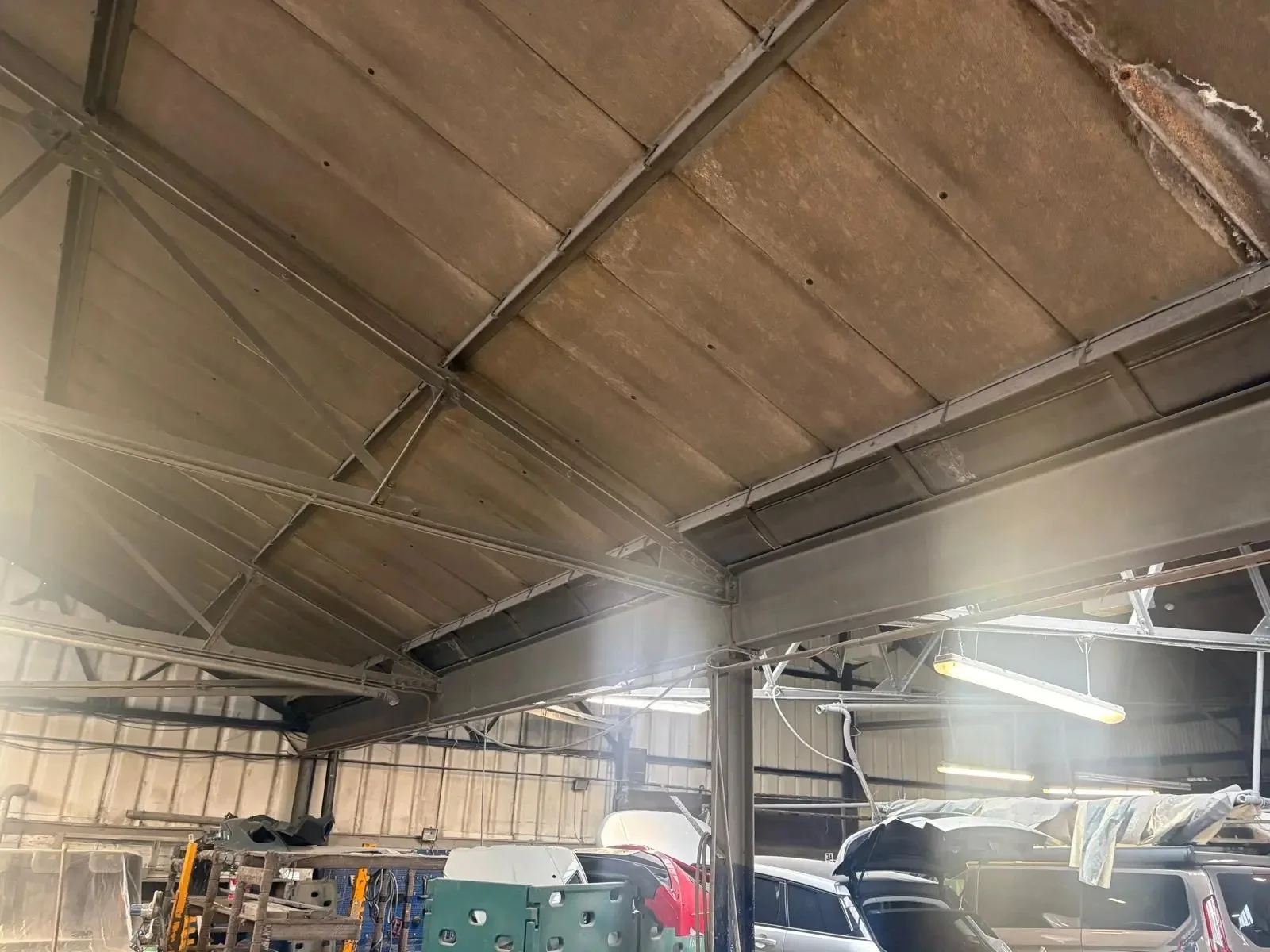
Genuine North East commercial-building photography used to show wider industrial access and building context. It is not presented as a photograph of asbestos pipe insulation.
When people contact us
Live triggers that usually need a clear next step.
Send the survey pages, pipe location, approximate length and diameter, condition, photographs, access, whether the service is live and the work planned afterwards.
Heating, boiler or mechanical replacement is waiting
Damaged insulation has been reported in a service area
Refurbishment or demolition needs a pipe run made safe
Identify the complete run
Asbestos pipe lagging in plant rooms, basements, ducts and ceiling voids
Send the survey pages that identify the insulation, including item number, location, extent and condition. A small damaged section may be part of a longer concealed run, so plans and photographs should show where pipes enter walls, risers or voids. Do not cut or unwrap insulation to expose layers for identification.
Pipe diameter and linear length are useful, but bends, valves, joints, brackets and restricted access also matter. Show the approach to the plant room or service area, working height and nearby equipment. Where several services run together, mark the confirmed asbestos item so the scope is not confused with adjacent non-asbestos insulation.
Live building services
Coordinate isolation, heating and mechanical work before removal
State whether the pipe is live, redundant or already isolated and who is responsible for proving that status. Hot-water, heating, steam or process services may require a planned shutdown by the building's competent mechanical team. The asbestos contractor should not be expected to discover service status after arriving on site.
Explain what follows removal: boiler replacement, pipe alteration, demolition or access for inspection. If replacement insulation or mechanical reinstatement is required, identify who provides it. This is especially important in occupied properties where heating or hot water cannot remain unavailable without an agreed programme.
Licensed Teesside work
Pipe-insulation enquiries across homes, institutions and industrial premises
Asbestos-containing pipe insulation is a higher-risk material and removal will commonly require an HSE-licensed contractor, subject to the confirmed material and task. Enquiries may arise in older basements around central Middlesbrough, communal service areas in Stockton or Hartlepool, and plant environments near Riverside Park, Haverton Hill or the wider Teesside industrial corridor.
For commercial or institutional buildings, include occupancy, security, inductions, confined access and the shutdown window. For a domestic property, explain the room, route to the exit and whether the heating engineer is already involved. In both cases, the survey evidence and safe service isolation are more important than trying to diagnose lagging from colour or surface texture.
Condition and urgency
Report damage without touching, wrapping or cleaning the insulation
If lagging is cracked, detached or has been struck during other work, stop access to the immediate area and describe the event. Do not sweep debris, apply tape or move the pipe covering to improve a photograph. State whether anybody disturbed it and whether the area is already secured so the enquiry can be triaged sensibly.
An urgent response still depends on knowing the confirmed material, location and service status. Provide the person controlling the building and the mechanical contact who can discuss isolation. For remote plant rooms or locked risers, make sure access can actually be provided at the agreed time; otherwise the specialist may arrive without being able to inspect the pipe run.
If debris may have fallen onto a boiler, tank, cable tray or floor below, show that wider area without moving anything. Note ventilation grilles and doors leading to occupied rooms. This gives the first review enough context to consider the affected space as well as the insulation still attached to the pipe.
Property and project context
Scope the material around the building that contains it.
Height, access, occupancy, condition, amount and the next trade all change how a removal project is assessed.
- Basements and domestic service routes
- Plant rooms, risers and ceiling voids
- Commercial heating and mechanical systems
- Industrial and institutional premises
Compare every asbestos removal, survey and testing service →
Buyer questions
What people ask before a free quote.
Answers are specific to this service or area. The actual survey and job scope still govern the work.
Does asbestos pipe lagging require a licensed contractor?
Asbestos-containing pipe insulation is a higher-risk material and removal will commonly require an HSE-licensed contractor. The confirmed material, condition and exact task determine the legal route.
Can pipe insulation be identified from a photograph?
No. A photograph can show location, condition and access, but it cannot reliably confirm asbestos content. Send the survey result or ask about appropriate inspection and sampling.
What pipe measurements should I provide?
Give an approximate linear length and diameter, and include bends, valves, joints and sections that enter walls or voids. Wide photographs help show the service route and nearby equipment.
Must the pipework be isolated before removal?
The service status must be established and any required shutdown coordinated by the responsible competent person. State whether the pipe is live, redundant or already isolated when you enquire.
Can removal be coordinated with a boiler or heating project?
Yes. Provide the mechanical contractor's programme and explain what must be removed before their work can begin, together with responsibility for isolation and reinstatement.
Do you cover commercial and industrial pipe lagging?
Enquiries are covered across Teesside, including plant rooms, service zones and industrial premises. Send the site rules, survey item, occupancy and shutdown constraints.
Free quotation
Send the pipe-insulation survey item and service status.
Include report pages, pipe location, approximate length and diameter, bends and valves, photographs, condition, access, whether the service is live and the work planned afterwards.
01642 921035